


This post is part of a series highlighting the chapters of our Top Franchise Digital Marketing Trends 2026 report, designed for franchise executives, marketing leaders, and agency partners to anticipate what’s next and act on it. If you would like to download a FREE copy of our report, please click here.
Be sure to check out the other posts in our series:
- What to Expect from AI in Franchise Marketing in 2026
- 2026 Playbook for Franchises: AI as a System
- AI-Powered Search & Discovery: The New Search Paradigm
- 2026 Playbook for Franchises: Competing in AI Search
- AI-Powered Digital Advertising & Personalization: The Rise of Intelligent Media
- 2026 Playbook for Franchises: Building an AI-Powered Advertising Engine
If you are interested in learning more about this topic, check out our blog – 2026 Playbook for Franchises: Becoming a Voice-Ready Franchise – to read alongside this post.
The Rise of Conversational Discovery
Voice search has matured from a novelty into one of the most natural ways people interact with technology. Consumers now talk to their phones, vehicles, home assistants, and even wearable devices with complete ease. What began as a simple utility has become the new entry point for digital discovery.
The evolution of voice interaction reflects a broader transformation in how artificial intelligence interprets and fulfills human intent. Modern conversational assistants such as Google Gemini, Apple Siri Plus, and Amazon Alexa have evolved from static voice search tools into intelligent agents capable of understanding context, making recommendations, and executing actions.
This shift marks the beginning of what many analysts call “conversational discovery.” Instead of browsing through search results, consumers increasingly receive a single answer or completed action. According to a 2025 report by Comscore, over 60% of mobile queries are now initiated through voice or conversational prompts, a number that continues to grow as speech recognition and contextual understanding improve.
For franchise organizations, this transformation presents both a challenge and an opportunity. Voice assistants prioritize data accuracy, clarity, and speed. When a potential customer asks for a nearby service, the assistant relies on structured data such as business names, categories, operating hours, prices, and verified reviews to determine which brand to surface. Inaccurate or incomplete information can mean the difference between being featured as the top result or being ignored entirely.
Similar to our findings in Chapter 2, the rise of conversational discovery signals the end of traditional keyword-driven optimization. The goal in 2026 is not just to appear in a list of search results, but to become the brand the assistant chooses when answering a question. The companies that invest now in structured data, consistent local information, and conversationally designed content will lead this next era of intelligent, voice-driven discovery.
What To Expect in 2026
Voice Is No Longer a Separate Channel
In 2026, voice will emerge as the default gateway into digital discovery. Where early digital strategies once separated voice search from SEO, paid media, and social media, the most successful brands will view it as the foundation of user interaction across devices. The rise of conversational AI has blurred the boundaries between search, chat, and transaction, turning voice into a core input method that connects every part of the customer journey.

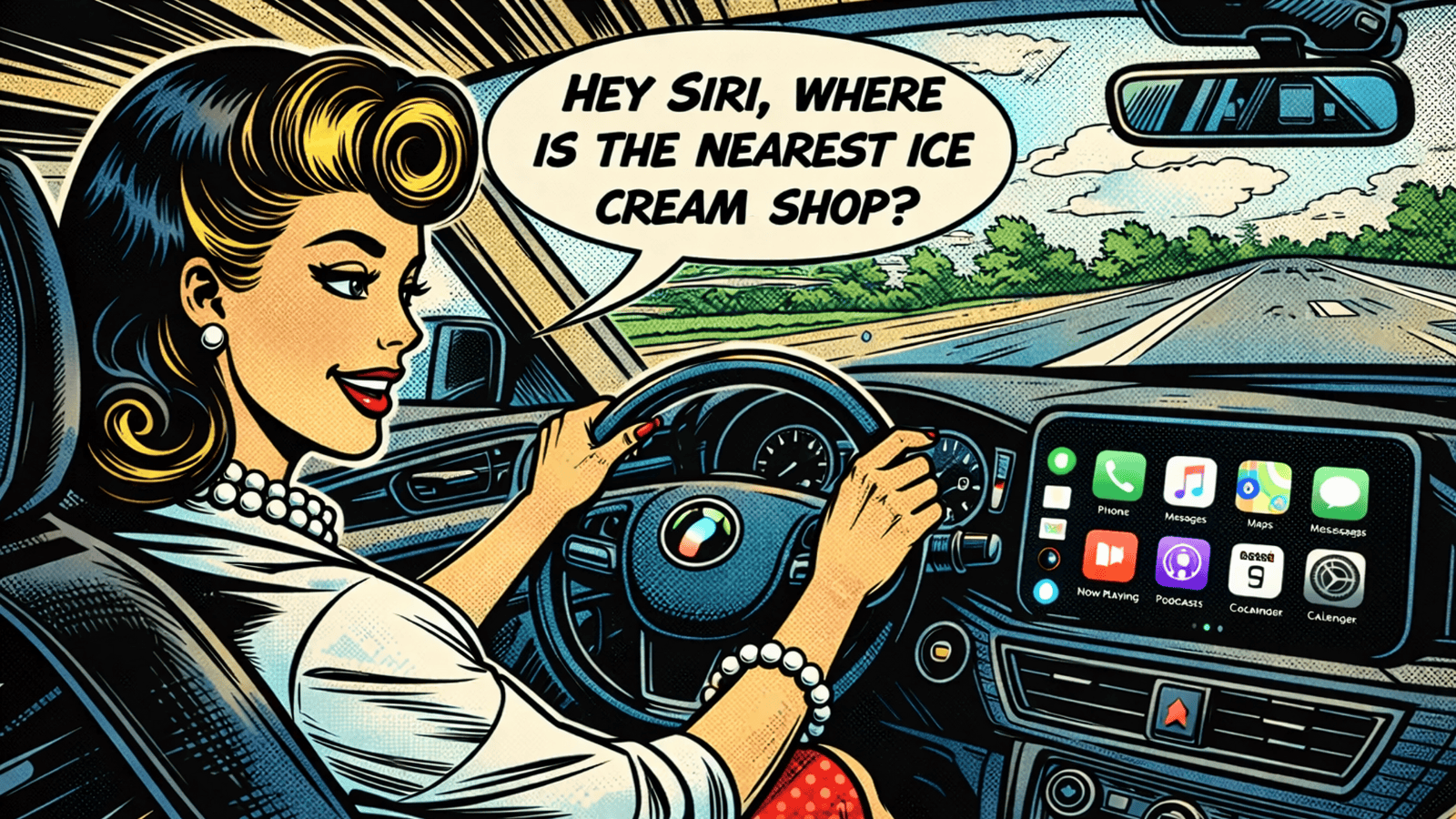
Voice interaction has become a natural part of modern life. Every major smartphone features an always-listening assistant powered by generative AI, capable of answering questions, summarizing information, and completing tasks with minimal input. Smart speakers and displays remain popular household devices, found in nearly 40% of North American homes, according to Statista’s Smart Home Adoption Report. In the automotive industry, voice is now the preferred interface for navigation, communication, and food ordering, with 75% of new vehicles sold in 2025 offering built-in AI voice systems, according to McKinsey’s Mobility Experience Study.
Wearables and augmented reality glasses are further shaping voice adoption. Consumers use these devices for quick, hands-free actions such as finding nearby stores, checking product availability, or reviewing loyalty rewards.
What used to be “search” is now a context-aware, personalized, and action-oriented dialog.
For franchise companies, this convergence is reshaping the local discovery landscape. A customer might ask their smartwatch for “the nearest tire service with appointments today,” or tell their car to “find a coffee shop with drive-thru and mobile payment.” These queries bypass traditional search pages entirely. Instead, the assistant identifies and recommends businesses whose structured data and verified information best match the request.
This evolution means that voice is no longer a distinct marketing channel. It is the front door to AI-powered search and the first point of contact between a customer and a local business. Brands that treat voice optimization as a separate initiative risk missing where the customer journey now begins.
The Long Tail Returns
In the early years of digital marketing, the “long tail” referred to the vast number of specific, low-volume search queries that collectively generated more traffic than the small group of high-volume, generic ones. Coined by Chris Anderson in a 2004 article and expanded on in his 2006 book, The Long Tail, the concept described how digital platforms made it profitable to serve many niche demands instead of focusing only on mass markets.
For search marketers, the long tail meant that optimizing for detailed, intent-rich phrases such as “best gluten-free pizza near downtown Metropolis” could outperform broad terms such as “pizza restaurant.” These long-tail searches signaled clear intent and converted at much higher rates. However, as digital advertising evolved and keyword-driven strategies became more automated, the focus shifted back toward scale and efficiency. Many brands abandoned the nuanced long-tail strategy in of aggregated audience targeting and smart bidding systems that prioritized volume over specificity.

Voice search has brought the long tail roaring back.
When people type (particularly on their phone), they tend to use shorthand queries like “car wash near me”, but when they speak, they use full natural language such as “Where can I get my car washed nearby that’s open right now and takes mobile payment?” These conversational queries are inherently long-tail because they contain context, intent, and emotion that traditional typed searches often lack.
According to Google, spoken queries are on average 23% longer than typed ones. In addition, BrightLocal found that voice users are three times more likely to include time-sensitive or conditional phrases such as “today,” “open now,” or “with curbside pickup.” This creates millions of highly specific micro-moments that companies can win if their data is structured and comprehensive enough for assistants to interpret and act on.
The long tail’s return is significant for marketers because voice assistants excel at understanding nuance. Instead of matching keywords, they interpret intent. For example, when a user says “I need a haircut before 5 p.m.,” the assistant evaluates both the query and the context, taking into account things like the current time, user location, and store availability to produce an actionable answer. Brands that provide structured, real-time data about hours, availability, and services can satisfy these requests directly.
In effect, voice search transforms every specific query into a conversion opportunity. Rather than competing for a handful of high-volume phrases, companies can be surfaced for thousands of intent-driven questions that align perfectly with what local customers actually need.
Comscore reports that 58% of voice searches carry explicit commercial intent, and 46% of those lead to an action within 24 hours. Meanwhile, Microsoft Advertising found that advertisers who optimized for conversational and long-tail queries saw 31% higher conversion rates compared to standard search optimization.
For multi-location brands, the long tail is especially powerful because it naturally localizes. Every combination of service, time, and place becomes a unique micro-market. For example:
“Order vegan tacos in Gotham tonight”
“Book an oil change near Metroville before 10 a.m.”
“Find a dentist open Sundays in Springfield”
Each of these phrases represents a long-tail query with clear intent and high conversion potential.
In 2026, the resurgence of the long tail will reward brands that invest in data precision and content architecture. Structured schema, localized landing pages, and consistent Google Business Profiles make it possible for AI assistants to connect the right query to the right franchise location in real time. The brands that win will not be the ones shouting the loudest, but those that answer the most precisely.
Conversational SEO Becomes the New Standard
As discussed in Chapter 2, for much of the past two decades search engine optimization has revolved around keywords and backlinks. Marketers sought to capture high-volume search terms such as “car wash near me” or “vegan pizza Metropolis”, optimizing pages for these types of phrases and building link authority to climb organic rankings. In 2026, however, the foundation of search visibility is changing. The new competitive advantage lies in crafting content that reflects how people naturally speak and providing direct, verifiable answers that AI assistants can quote verbatim.
Voice commands, smart assistants, and conversational interfaces have shifted user behavior dramatically. Instead of typing fragmented keywords, users now ask full, natural-language questions such as “Where can I get an oil change near King Street that takes mobile pay today?” According to Statista, there were approximately 4.3 billion voice assistants in use globally in 2023, with that number expected to double to 8.4 billion by 2026. Similarly, Comscore reports that over 60% of mobile searches are now initiated through voice or conversational prompts.

This evolution means that users expect fast, direct, and natural responses rather than scrolling through traditional listings. Writesonic’s guide on AI-powered search behavior notes that conversational queries have a 23% longer average length than typed queries and carry stronger indicators of intent.
In this new paradigm, clarity, tone, and structure determine discoverability. Pages that include question-based headings, short declarative sentences, and well-organized bullet lists are more likely to be cited in AI-generated summaries. According to a 2025 study by Google, websites that already ranked within the top 10 organic results were 52% more likely to appear in AI-generated overviews after implementing conversational content design.
Conversational optimization is not merely a stylistic preference – it directly impacts search visibility in generative environments.
An arXiv analysis of 1,700 citations across multiple search engines found that metadata quality, schema markup, and content freshness were the three strongest predictors of whether a website was included in AI-generated answers. In other words, machine-readable content, particularly when paired with conversational phrasing, signals trust and authority to AI systems.
For companies, this means a rethink of website copy, FAQ pages and promotional material. Traditional copy might say:
“We offer oil changes for cars and trucks at our downtown location.”
In a voice-first world, a more effective answer reads:
“Yes. Our downtown location offers full-service oil changes for cars and trucks, and it is open until 7 p.m. today.”
Such phrasing mimics what a user would ask and what an assistant can read aloud. To execute this effectively, your content should include:
- Natural-language queries as headings, such as “Can I book an oil change late afternoon downtown?”
- Immediate, stand-alone answers in the first sentence, followed by supporting details.
- Structured markup (FAQ schema, HowTo, LocalBusiness) so that AI systems parse your content correctly.
- Local context and accurate data (hours, promos, service types) so that conversational queries rooted in “near me” intent are satisfied.
Conversational SEO is not simply “optimizing for voice”; it is about aligning your entire content architecture to serve human-style questions, provide machine-readable clarity and establish your brand as the trusted answer. Ultimately, visibility in the AI era will depend less on how many keywords you rank for and more on how clearly and conversationally you respond.

Local Voice Commerce Explodes
In 2026, the landscape of voice-enabled commerce is poised to accelerate dramatically, especially for local services. What began as simple voice queries is evolving into full transactional experiences where consumers speak commands and complete purchases without touching a screen. According to Capital One, about 49 % of Americans already use voice search for shopping purposes, and they project that voice shopping will drive 30% of ecommerce revenue by 2030.
Voice is no longer just a discovery channel, but a direct path to conversion.
For franchise brands, this means that when a customer says “order pizza for pickup at the nearest location” or “book my car service for tomorrow”, the assistant moves straight from query to action, bypassing the traditional website browser and click journey entirely. To capture this wave, franchise systems must ensure that voice-era pathways are operational, including real-time inventory, up-to-date hours and services, integrated scheduling, and integrations with fulfilment.
The growth trajectory is compelling. A report from Grand View Research estimates the global voice commerce market was valued at around US$42.8 billion in 2023, and projects it to reach US$186.28 billion by 2030, with a compound annual growth rate (CAGR) of about 24.6% from 2024 to 2030. Another forecast by Market.us projects that the industry will grow from roughly US$66.5 billion in 2024 to US$714.5 billion by 2034 (CAGR of about 26.8 %).

The local service context makes this especially relevant for franchise companies. Voice commerce is most powerful when tied to geography, immediacy, and convenience. According to DemandSage, approximately 76 % of voice searches for local businesses include phrases like “near me”, underscoring the local intent inherent in voice queries. In practical terms, a user might ask their smartwatch to “find the closest tire alignment shop open now” and expect a booking or offer delivered instantly.
Adapting to this environment involves several strategic shifts:
1. Data-readiness and real-time integration
Company location database must include accurate business names, categories, hours of operation, service menus, and live availability. The machine must be able to treat each location as a trusted answer node.
2. Voice-enabled fulfillment flows
Whether it’s schedule booking, ordering pickup, or local delivery, companies require a backend that supports voice triggers. Voice commands should map to actual steps, not just generate a search link.
3. Local relevance amplified
Because voice commerce grows fastest in the local context, networks that enable local owners to contribute real-time offers, local inventory, and dynamic promotions will gain an advantage.
4. Measurement and attribution tuned for voice
Track voice-triggered conversions and local actions as primary metrics. Understand how voice-initiated flows contribute to visits, bookings and sales rather than just clicks.
Implications for Franchise Companies
For franchise organizations, the rise of voice search and conversational discovery represents a fundamental shift in how local customers find, evaluate, and act. Because voice interactions tend to be highly local, specific, and action-oriented, franchise systems must adapt their digital infrastructure and operational workflows to remain discoverable and competitive.
Voice Requests Depend on Data Accuracy
In the voice-first era, data accuracy has become the single most important factor influencing local visibility, credibility, and conversion. Voice assistants such as Google Assistant, Amazon Alexa, and Apple Siri pull business information directly from Google Business Profiles (GBPs), local landing pages, and trusted data aggregators such as Yelp, Bing Places, and Apple Maps. When that information is incomplete or inconsistent, the assistant either delivers the wrong details or excludes the business entirely from its spoken response.
The relationship between voice assistants and structured data is direct. Google has confirmed in several articles that Business Profile accuracy and freshness are two of the top weighting factors in determining whether a listing is eligible to appear in voice responses or AI-powered map packs (Google Search Central). In other words, when an assistant answers “Where is the nearest oil change open right now?”, it is using structured, verified data to make that determination.
For franchise companies, even a single outdated phone number or incorrect holiday hour at one location can lead to dozens of missed calls or orders each week.
Each data field matters:
- Name, Address, and Phone (NAP) must be identical across all listings, websites, and directories. Discrepancies confuse both users and AI crawlers.
- Categories and Attributes should reflect real offerings, such as “drive-through,” “wheelchair accessible,” or “pet friendly,” which influence how voice assistants match user intent.
- Special Hours and Closures must be preloaded for holidays or weather events to prevent customers from hearing inaccurate information.
- Booking URLs and Action Links allow assistants to complete tasks instantly, such as scheduling appointments or placing orders.
A 2025 study by Moz found that businesses maintaining consistent NAP and updated special hours experienced a 27% increase in voice search impressions over a six-month period compared to those with incomplete listings. The same study found that listings with booking or ordering URLs had 35% higher conversion rates when surfaced by Google Assistant.
To ensure that every franchise location provides authoritative data, leading franchise companies are investing in automated synchronization pipelines that connect corporate databases, Google Business Profiles, and third-party directories. This ensures that any corporate-level change, such as new pricing, promotional updates, or modified hours, is automatically cascaded to every location profile in real time.

In an environment where voice assistants can only surface one or two options per query, even a small lapse in data consistency can erase an entire location from consideration. Maintaining an accurate, synchronized, and verifiable data ecosystem is absolutely critical.
Voice-Friendly Content Wins Attention
In an era of conversational discovery, the way content is written determines whether it is quoted or ignored by AI assistants. Systems like Google Assistant, Amazon Alexa, and Apple Siri are programmed to prioritize brevity, clarity, and structure over length or complexity. Voice assistants read concise, declarative sentences rather than long paragraphs, which means that traditional marketing copy that is dense with keywords and brand language often fails to appear in spoken responses.
A Backlinko Voice Search Study (2024) analyzed over 10,000 Google Home results and found that the average voice search answer was only 29 words long and written at a ninth-grade reading level. The study also noted that voice assistants prefer pages with clearly labeled question-and-answer structures, with 40% of spoken results coming directly from pages formatted as FAQs. Similarly, a Searchmetrics 2025 report concluded that content written in plain, conversational language had a 52% higher chance of being selected by generative search models compared to dense or jargon-heavy text.
The goal is no longer to rank higher on a list, but to become the answer.
This shift rewards brands that anticipate questions and answer them naturally. This involves creating a content library built around voice-friendly FAQs that directly address common customer needs. Instead of embedding answers deep within long paragraphs, information should be explicit and self-contained:
“What are your hours today?” → “We are open from 8 a.m. to 9 p.m. every day.”
“Do you offer curbside pickup?” → “Yes, curbside pickup is available at all locations.”
“Can I book online?” → “Yes, you can book an appointment online or by voice.”
This format aligns perfectly with how AI assistants parse and relay content. According to Google’s Search Quality Evaluator Guidelines, responses that are “concise, factual, and contextually relevant” are favored for featured snippets and voice answers.
To maximize visibility, franchise companies should use structured markup and fast-loading, schema-optimized pages:
- Publish FAQ content with FAQPage schema, allowing Google and other assistants to identify question-answer pairs directly.
- Maintain a Time to First Byte (TTFB) under 500 milliseconds, as Google’s Core Web Vitals documentation notes that latency beyond half a second increases abandonment likelihood by 20%.
- Use semantic headings (H2, H3) to make questions machine-readable and improve the crawlability of localized FAQs.
Franchise organizations that combine fast, structured, and conversational content formats gain measurable advantages. BrightEdge reports that locations with FAQPage schema and short-form Q&A structures experience a 37% increase in voice search impressions and a 28% increase in assistant citations compared to those relying on traditional text-heavy content.

Franchise marketers who adapt their copy to sound natural, load quickly, and read cleanly will outperform competitors still focused on keyword density and branding language.

Local Wins Through Authority
Voice assistants determine which businesses to recommend not only by relevance, but also by their confidence in the accuracy of the information they are presenting. A brand that provides clear, consistent, and corroborated data across its website, Google Business Profiles (GBPs), and third-party listings is far more likely to be selected in spoken results. Conversely, inconsistencies between listings, such as different operating hours, mismatched addresses, or conflicting phone numbers, can cause the AI system to lose confidence and exclude the business entirely from its response set.
AI systems rely heavily on corroboration. When an assistant fields a query such as “find a nail salon near me open now,” it does not pull data from a single source. Instead, it cross-references structured information from Google’s Knowledge Graph, local business profiles, the brand’s own domain, and authoritative third-party aggregators such as Yelp, Apple Maps, and Bing Places. If any source contains conflicting or outdated data, the assistant may disregard the listing entirely.
Franchise systems that perfect their data synchronization today will be the ones that succeed tomorrow.
To ensure consistent data quality, franchise organizations should establish a single canonical source of truth for all location data. This framework should be owned and managed by the corporate marketing or digital operations team and automatically distributed to every channel.
Research by Whitespark found that businesses using a centralized listings management system achieved a 29% higher visibility rate in voice search results than those relying on manual updates. Similarly, a 2025 study by Uberall observed that multi-location brands with synchronized location data across five or more platforms generated 33% more “near me” impressions and 21% more direction requests within Google Maps.

By consolidating ownership of local data and reinforcing it across every ecosystem, franchise systems establish digital authority that AI assistants can trust. The corporate website should function as the authoritative source from which all local listings derive their information. When an assistant checks for verification, the facts it finds on the brand’s site should perfectly match those in Google’s Knowledge Graph and business directories.
This process does more than improve search performance; it strengthens the brand’s digital integrity. In 2026, as voice assistants increasingly control which businesses customers hear about, authority will be earned through precision, consistency, and trustworthiness.


